Their trick makes VRAM independent of scene size. The test scenes were too small to show it.
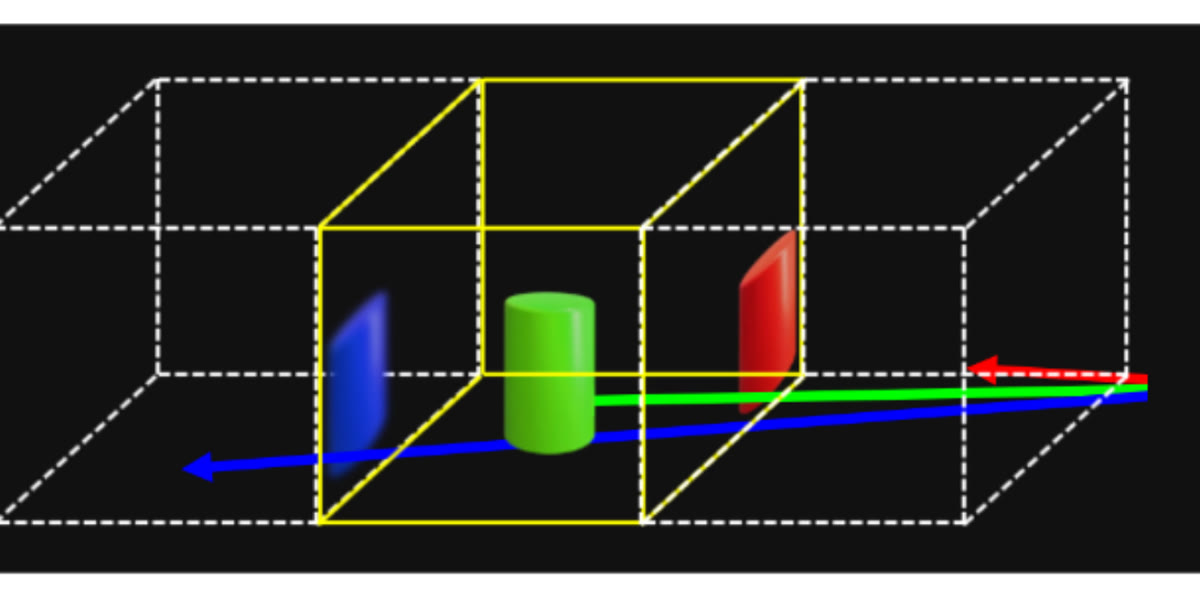
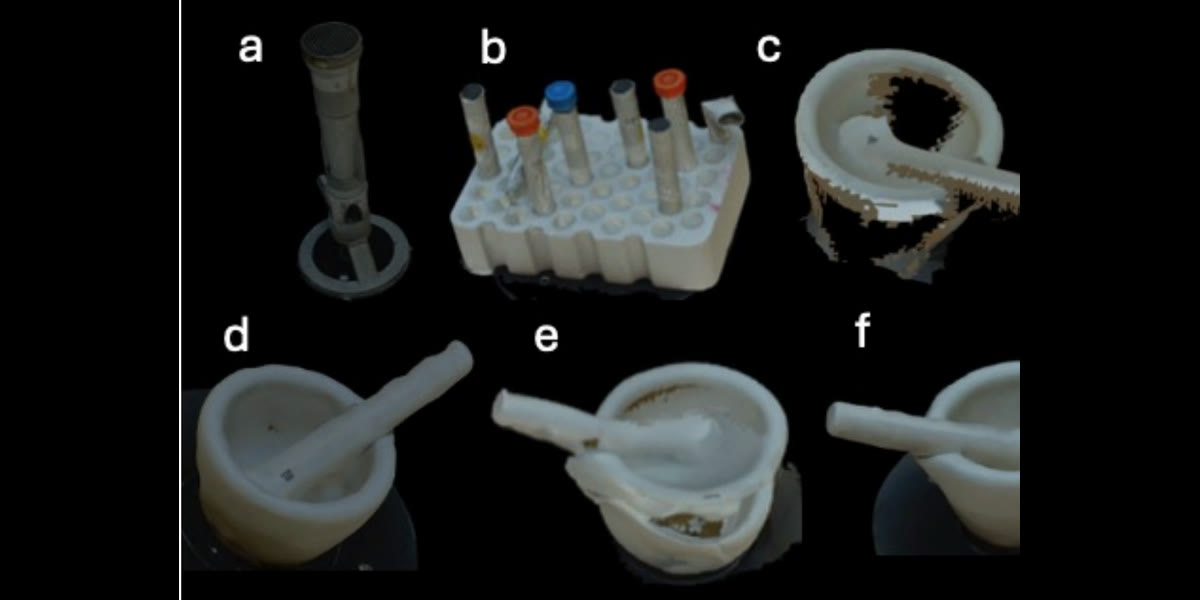
Figure: Shiu and Subr, University of Edinburgh · Research

GPU memory is the wall every large capture eventually hits, because conventional training keeps every Gaussian resident while it optimises any of them. Ka Heng Shiu and Kartic Subr at the University of Edinburgh propose not doing that, and the observation that makes it work is almost embarrassingly simple: alpha blending is associative, so anything you are not currently optimising can be flattened.
Why it matters: The obvious way to train a scene too big for a GPU is to cut it into partitions, train each alone and stitch them together. It does not work well, because a partition trained in isolation compensates for the geometry it cannot see, and the seams show. Prior work has attacked that with overlapping partitions and boundary primitives.
ABCD keeps the partitioning but removes the isolation. It optimises one block at a time with the rest frozen — block coordinate descent — and rather than dropping the frozen blocks it pre-renders them. Because alpha compositing is associative, everything in front of the active partition can be collapsed into a single foreground RGBA image and everything behind it into a single background one, per camera. The active block trains against those two flat images instead of against millions of frozen primitives.
The consequence is the paper's central claim: for a fixed partition size and image resolution, peak VRAM no longer depends on how big the scene is. It depends on one block plus two images.
By the numbers:
- The compositing is what preserves quality, and the ablation proves it. Without it, PSNR collapses from 25.52 to 16.10 — a 36.9% degradation. With it, quality lands within 5% of unmodified 3DGS.
- On the garden scene: 3DGS scores 24.01 dB, ABCD 23.65. On kitchen: 27.03 against 25.80.
- Peak VRAM averages 0.785 GB for ABCD against 0.925 GB for 3DGS — a 15.1% saving.
- System RAM goes the other way, and hard: 21.38 GB against 5.81 GB for 3DGS, because the cached per-camera renders have to live somewhere.
- Training time averages 1,061 seconds against 83.5 for 3DGS. That is roughly twelve times slower.
Yes, but: A 15% VRAM saving is not what an asymptotic result promises, and the authors explain the gap themselves rather than leaving a reader to find it: the two scenes tested — garden and kitchen, around 200 cameras each — contain too few Gaussians for parameter memory to dominate. Optimiser state and image overheads swamp the saving. The asymptotic benefit is, in their word, masked.
So the honest reading is that the mechanism is demonstrated and the payoff is not. Everything shown is consistent with the claim; nothing shown requires it. A method whose entire purpose is scenes that will not fit in memory has been evaluated only on scenes that comfortably do.
The costs, meanwhile, are measured rather than projected. Twelve times the training time is attributed to poor rasteriser occupancy — active partitions hold few enough primitives that kernel launch overhead dominates — which should improve at scale, but that too is an expectation rather than a result.
Their framing of the tradeoff is the fair one: the method shifts the limiting resource from scarce GPU memory to cheap storage, and the cached images can be streamed from disk. If your alternative is not training the scene at all, twelve times slower is a bargain. If it is not, it isn't.
The big picture: This has been a fortnight of the field discovering it needs to bound things. luma.gl added a residency window, Babylon.js added a render budget, a 3D Tiles plugin inherited tiling and disposal wholesale. Those all bound what you draw. ABCD bounds what you train, which is the harder half and the one that has been quietly forcing people onto multi-GPU rigs.
The idea deserves to be tried at the scale it was designed for. Associativity of alpha compositing is a property nobody can take away, and if the constant-memory claim holds on a scene of genuine size, the twelve-fold slowdown stops being the headline and starts being the price.