LocusGS gives instant splats a sense of place
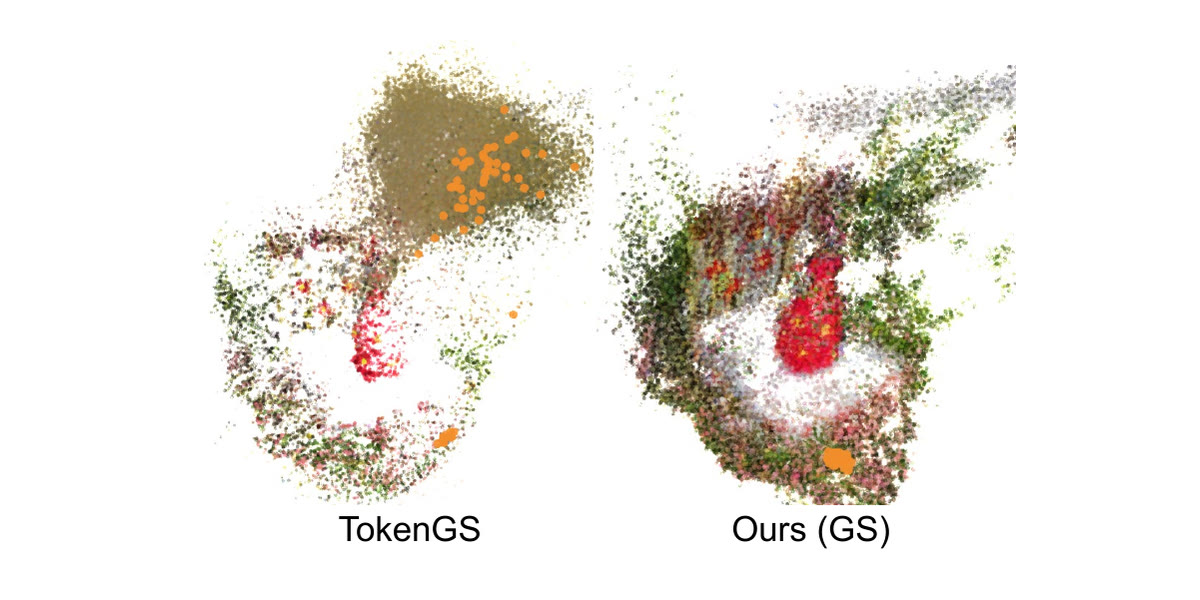
Figure: Li et al., National University of Defence Technology · Research

Wenyu Li and colleagues at NUDT diagnosed a structural flaw in query-based feed-forward gaussian splatting — the queries have no idea where they are — and fixed it by giving each one an explicit position in 3D space.
Why it matters: Feed-forward splatting is the branch that skips per-scene optimization: images in, gaussians out, no training run per capture. It is the path to splats that appear as fast as you can photograph something.
Its quality ceiling is the thing standing between that and production use, and this paper identifies a specific, unglamorous reason the ceiling is low.
The diagnosis: These models represent a scene with learnable queries; each query gathers evidence across views and decodes a clutch of gaussians. In principle each should own a coherent patch of the scene.
In practice the authors found gaussians from a single query landing in distant, unrelated parts of the scene — because the query is a purely latent vector with no spatial grounding at all.
Zoom in:
- Each query gains an anchor state: a 3D center plus a support radius, refined layer by layer through the decoder.
- An anchor-to-ray geometric bias steers each query toward the image observations that are actually spatially relevant to it.
- Anchor-centered decoding keeps a query's gaussians inside its own local region.
By the numbers: On novel-view synthesis benchmarks, LocusGS beats query-based baselines at an identical gaussian budget — the improvement comes from better-organized gaussians, not more of them.
Between the lines: This is the second paper this week arguing that splats need explicit structure rather than more latent capacity — CausalSplat made the same bet with scene graphs. The transformer-everything instinct is meeting a representation that already has coordinates, and losing ground.